

Remarks On Understanding What LLMs are Saying
In his seminal Word and Object (Quine, 1960), Willard van Orman Quine, near the beginning of Chapter II, invites us to contemplate what he calls a “first uncritical way of picturing the scope for empirically unconditioned variation.” The picture is this: two persons, situated in identical circumstances and exposed to precisely the same stimulation from their shared environment, utter the very same sentences; yet these sentences may purport to mean utterly different things. The empirical circumstances, considered in themselves, leave room for such a radical divergence. Nothing in the observable situation compels us to suppose that the two speakers mean alike.
(...)
Seven Stars
In 1916 a Dane, Charles Kliene (1867-1952) translated the Seven Stars, a famous end-game from an ancient Xiangqi book and the first Xiangqi manual published with widespread appeal in the west.
(...)
Forgotten Cyberneticians: Louis Couffignal (1902-1966)
Louis Couffignal was an early promoter of Cybernetics in France. A mathematician with an interest in calculating machines and binary logic in the ’20s and ’30s, he met and befriended Norbert Wiener in 1946. In 1948 Norbert Wiener, professor at MIT, published Cybernetics or Control and Communication in the Animal and the Machine, a widely circulated and influential book that applied theories of information and communication to both biological systems and machines. Computer-related words with the “cyber” prefix, including “cyberspace,” originate from Wiener’s book. Cybernetics was also the first conventionally published book to discuss electronic digital computing. Maybe because of these ties between Wiener and Couffignal, the first edition of the book was published in English in Paris at the press of Hermann et Cie. (The first American edition was printed offset from the French sheets and issued by John Wiley in New York, also in 1948.)
(...)
Memory Traces: Are Transformers Tulving Machines?
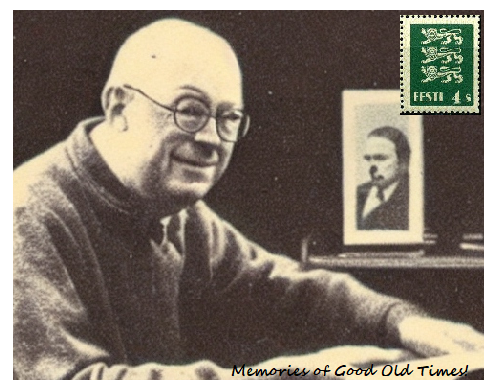
Memory traces–changes in the memory system that result from the perception and encoding of an event–were measured in pioneering studies by Endel Tulving and Michael J. Watkins in 1975 (Tulving and Watkins, 1975). These and further experiments informed the maturation of Tulving’s memory model, from the GAPS (General Abstract Processing System) to the SPI (Serial-Parallel Independent) model (Tulving, 1983). Having current top of the line LLMs revisit the original Tulving-Watkins tests may help in assessing whether foundation models completely instantiate or not this class of psychological models.
(...)
Memory GAPS: Would LLM pass the Tulving Test?
The Tulving Test looks into memory performance in recognition tasks compared to recall tasks.
(...)
The content of this page by CRT_and_KDU is licensed under a Creative Commons Attribution-Attribution-ShareAlike 4.0 International.